There is an interrelatedness of our physical health, our psychological well-being, and our sexuality which is extremely complex. This relationship is not considered as long as we remain in good health, but as we age the probability of encountering physical and emotional problems and limitations increases. Our bodies betray us in a variety of waysThey grow too much or not enough or in the wrong places. They develop aches and pains and strange symptoms and are subject to devastating injuries and diseases. As a result, we must be informed about these problems to deal with them effectively and how these changes can influence our sexuality. As we grow emotionally and physically, we may also develop new perceptions of what it means to be healthy.
During this lecture, we will address: living in our bodies, alcohol, drugs, and sexuality, sexuality and disability, as well as cancer, and other health issues related to sexuality.

Sexual health is the state of physical, emotional, mental, and social wellbeing related to sexuality. It is not merely the absence of disease, dysfunction, or infirmity. It is how we function biologically as well as the function of our behavior and our awareness and acceptance of our bodies. Our general health affects our sexual functioning and requires us to know and understand our bodies and feel comfortable with them, have a positive and respectful approach to sexuality and sexual relationships, and requires us to know the possibility of having pleasurable and safe sexual experiences free of coercion, discrimination, and violence. Sexual rights of all persons must be respected, protected, and fulfilled to attain and maintain sexual health. However, this may contradict with societal and personal expectations.
Image: McGraw Hill

Sexual health has to do with how we function biologically, but it is also a function of our behavior and our awareness and acceptance of our bodies. In terms of sexuality, good health requires us to know and understand our bodies, to feel comfortable with them. Our general health affects our sexual functioning. Fatigue, stress, and minor ailments all affect our sexual interactions. If we ignore these aspects of our health, we are likely to experience a decline in our sexual drive, as well as suffer physical and psychological distress.
Furthermore, being unhappy with physical appearance can influence a person's sexuality. Many of us are willing to pay high cost—physically, emotional, and financial—to meet expectations of our culture and to feel worthy, loveable, and sexually attractive. But the quest for physical perfection may be one of futility. What price are you willing to pay? Health and sexuality are gifts that should be respected and nurtured, not used and abused.
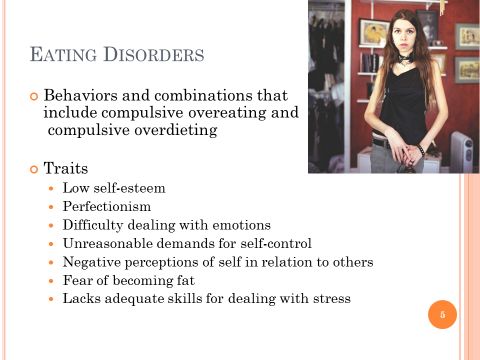
Eating disorders are one health issue that can affect your sexuality. It is defined as the compulsive overeating or over dieting or a combination of both. Common traits of people with eating disorders include low self-esteem, perfectionism, difficulty dealing with emotions, unreasonable demands for self-control, negative perceptions of self in relation to others, and the fear of becoming fat. Having these desires is normal, but the means by which we try to fulfill them can be extreme and self-destructive.
Image: McGraw Hill
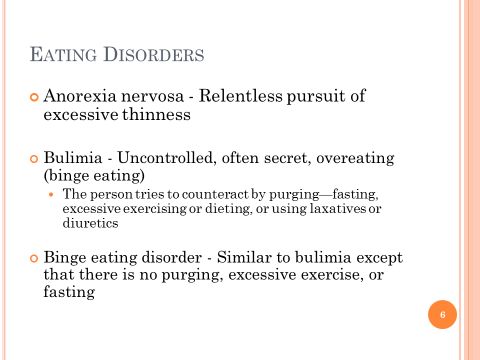
Although white, middle, and upper class women are singled out with having eating disorders, these problems transcend ethnic and socioeconomic boundaries. Among minorities, females who are younger, have more body weight, are better educated, and identify with middle class values are at higher risk for eating disorders than their peers. Anorexia nervosa is a specific type of eating disorder where there is an all controlling desire for thinness. One has a distorted image of one's own body and diets obsessively. Sexual dysfunction often accompanies anorexia and includes amenorrhea, which is the delay of menarche or cessation of menstrual periods for at least three menstrual cycles. The woman may also not be able to achieve secondary sex characteristics or experience hypothermia, which is the body's inability to maintain heat.
There are two types of anorexia nervosa: restricting and binge eating and purging. Restricting is weight loss as a result of dieting, fasting, or excessive exercise, but no regular binge eating or purging. Binge eating and purging is done at least weekly. Bulimia and binge eating disorder is a type of eating disorder with uncontrolled overeating. With bulimia, the individual overeats but then purges by vomiting, dieting, exercising excessively, or taking laxatives which exemplifies a sense of lack of control. With binge eating disorder, the individual may overeat without purging and use food to cope with stress, conflicts, and other difficult emotions.
According to the National Institute of Mental Health, eating disorders are very complex, and consequently researchers are unsure of their underlying biological, behavioral, and social causes. Scientists and physicians are increasingly thinking of them as medical illnesses with certain biological causes.
Treatments for eating disorders are complex and require comprehensive treatment plans including medical care and monitoring, psychosocial interventions, nutritional counseling, and possible medications. Eating disorders can be treated and healthy weight restored, although for some individuals the treatment may be long term. Clinicians often find that histories of sexual abuse including incest or other sexual abuse contribute to eating disorders.
Along with eating disorders, the use of anabolic steroids can affect your sexual health. They are the synthetic version of the hormone testosterone and are used often by body builders and other athletes. They are also used to promote the fast development of skeletal muscle and to enhance body image and athletic performance. They are addictive because they produce a state of euphoria, diminish fatigue, and increase a sense a power. However, there are serious and permanent body damages that can result from the use of anabolic steroids and some are irreversible including sterility, heart attacks, strokes, liver damage, and personality changes. If used in men, testosterone production shuts down causing breast growth and testicular atrophy, which is the decrease in size or wasting away of the testicles. In healthy women excessive hair growth, acne, and reproductive problems, as well as voice changes can occur. Non-athletes also use anabolic steroids. To obtain these steroids a prescription is required. If you do not have a prescription it is illegal as well as dangerous.
Drugs and alcohol also have their effect on sexuality. They are commonly perceived as enhancers of sexuality. However, they rarely enhance sexual performance and decrease the ability of men and women to become physically aroused. Because of the ambivalence we often have about sex, many people feel more comfortable about initiating or participating in sexual activities while intoxicated than if they were sober. Disinhibition is the phenomenon of activating behaviors that would normally be suppressed. Although a small amount of alcohol may have a small disinhibiting, or relaxing, effect, greater quantities can result in aggression, loss of judgment, poor coordination, and loss of consciousness.
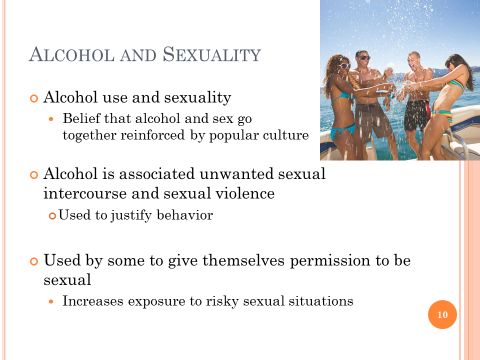
The belief that alcohol and sex go together, although not new, is certainly reinforced by popular culture.
It is well known that alcohol use among college students is very common. In highly charged sexual situations, intoxication has been reported to increase drinkers' willingness to engage in unprotected intercourse by fostering their belief that they are aroused.
Alcohol use has also been found to be associated with numerous dangerous consequences such as unwanted sexual intercourse and sexual violence. The disinhibiting effect of alcohol allows people to justify various actions that they would not engage in sober. Alcohol use is often a significant factor in sexual violence of all types.
Drinking alcohol has long been assumed in both the scientific and popular literature to lead to sexual risk taking. However, alcohol use among young people is just one component of an overall risk behavior pattern and not the cause of sexual risk behavior. Additionally, impulsivity/sensation seeking, sociability, and usual drinking pattern provide a broader explanation for sexual risk taking than acute alcohol effects.
Image: McGraw Hill
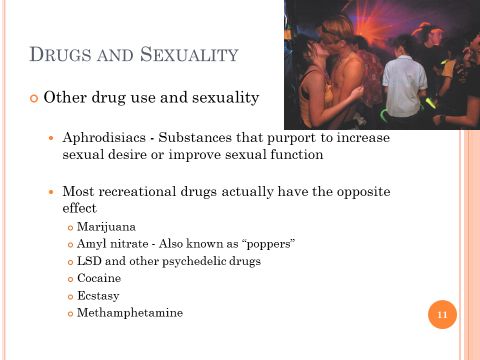
There are many types of drugs that affect sexual health including aphrodisiacs, marijuana, amyl nitrate, LSD, cocaine, methamphetamines, and ecstasy. Aphrodisiacs are substances that supposedly increase sexual desire or improve sexual function.
Most recreational drugs actually have the opposite effect. The effects of marijuana are determined by the expectations of the users. However, the drug can become a crutch to help deal with situations or behaviors they find uncomfortable and can enhance mood and reduce inhibitions. Long-term use of marijuana can cause or contribute to low motivation to achieve and a low sex drive. Amyl nitrate, or AKA poppers, is another drug that can affect sexuality. It expands blood vessels around the heart and is used in an attempt to intensify orgasms. It also causes the engorgement of blood vessels in the penis and causes a drop in blood pressure, which can lead to dizziness and giddiness. Side effects also include severe headaches, fainting, and can cause a burn if contact with the skin occurs.
LSD and other psychedelic drugs are often used and affect sexuality; however, there is no positive effect on sexual ability with the use of these specific drugs. In addition, there is cocaine, which reduces inhibitions and enhances feelings of well-being. Regular use can lead to sexual difficulties in both men and women, including the ability to achieve erection or orgasm, and injectors experience the greatest dysfunction.
There is also ecstasy, which is an hallucinogenic amphetamine producing heightened arousal and mellowing effect as well as enhancing a sense of self. Ecstasy is illegal and is associated with dehydration due to physical exertion without breaks for water. Heavy use effects include paranoia, liver damage, and heart attacks. It also lowers sexual inhibitions because of feelings of increased empathy. Men generally cannot get erections when high with the use of ecstasy. Other drugs include methamphetamines, which increase the sexual interest, which leads to dangerous behaviors. With all drugs, however, it is important to know that they put people at significant risk for sexually transmitted infections and violence.
Image: McGraw Hill
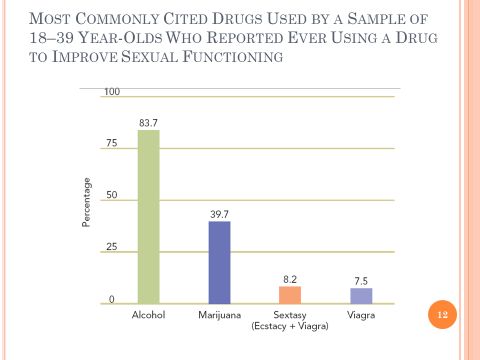
This slide demonstrates the prevalence of the use of drugs among over a thousand sexually experienced individuals aged 18 to 39 years, which was studied to determine if participants had ever used drugs to enhance their sexual experience. As we can see, alcohol and marijuana are the most widely used and abused drugs.
Image: McGraw Hill
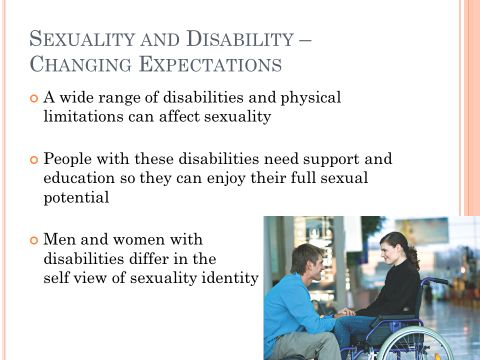
A wide range of disabilities and physically limiting conditions affect human sexuality. Yet the sexual needs and desires of those with disabilities have generally been overlooked and ignored. People with disabilities need support and education so they can enjoy their full sexual potential. Men and women with disabilities differ in their self-view of sexuality identity.
Image: McGraw Hill
There are a number of physical limitations which affect sexual health. For men with spinal cord injuries they are able to have a full or partial erections and some may even ejaculate, but the orgasmic feelings accompany ejaculation are generally absent. Women with spinal cord injuries do not experience orgasm but are able to experience sensuous feelings in other parts of the body. The injury does not affect their fertility, and women can have painless childbirth, but forceps delivery, vacuum extraction, or caesarean section may be necessary. Individuals with vision and hearing impairments may have communication difficulties within their sexual relationships due to a lack of visual and auditory skills. However, they may overcome these with education or counseling depending on the circumstances.
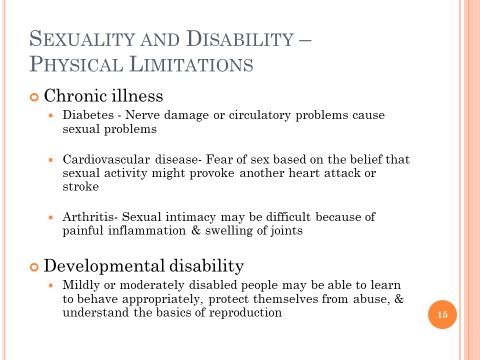
Chronic illnesses are the main causes of death and disease in the US. Chronic diseases such as diabetes, cardiovascular disease, and arthritis are the three most prevalent diseases in America. Although these conditions are not always described as disabilities, they may require considerable adjustments in a person's sexuality because they, or the medications or treatments given to control them, may affect libido, sexual capability or responsiveness, and body image.
For diabetes, the nerve damage or circulatory problems cause sexual problems. Men with heavy alcohol use and poor blood sugar control may increase the risk of erectile problems if they have diabetes, and women with diabetes may have less interest in being sexual due to frequent yeast infections and vaginal dryness.
For cardiovascular disease, the fear of sex based on the belief that sexual activity might provoke another heart attack or a stroke is real. Individuals may enter a period of depression including a loss of libido. However, in general, the chance of a person with a prior heart attack having another one during sex is no greater than that of anyone else.
Individuals with arthritis are characterized by painful inflammation and swelling of the joints, usually of the knees, hips, and lower back, which may lead to deformity of the limbs. Sexual intimacy may be difficult because of the pain. As a result, oral sex, general pleasuring of the body, and creative positioning have its advantages for those who have arthritis. Furthermore, applying moist heat to the joints prior to sexual activity may also help. There are also individuals with developmental disabilities. These are defined as mildly or moderately disabled people who may be able to learn to behave appropriately, protect themselves from abuse, and understand the basics of reproduction. Individuals with developmental disabilities can have severe, lifelong, chronic conditions such as autism, cerebral palsy, mental retardation, language and learning disorders, attention deficit hyperactivity disorder, and sensory impairments. However, these individuals still may want to engage in sexual activity and have a right to do so.

The sexual rights of persons with disabilities should be the same as those for persons without disabilities. The federal Developmental Disabilities Assistance and Bill of Rights Act of 2000 explicitly state that individuals with intellectual disability have the fundamental right to engage in meaningful relationships with others.
The rights of people with disabilities include the right to sexual expression, the right to privacy, the right to be informed about and have access to needed services including contraceptive counseling, medical care, genetic counseling, and sex counseling. They also have the right to choose one's marital status, the right to have or not to have children, and the right to make one's own decision and develop to one's fullest potential.
Image: McGraw Hill

Cancer is another common health issue that affects sexuality. It is the result of the aberrant behavior of cells. Carcinogens, or cancer causing agents, are believed to scramble DNA messages within cells leading to an abandonment of its normal functions. As a result, cancer can come in the form of benign or malignant tumors. Benign tumors are slow growing and localized, whereas malignant tumors are cancerous and invade nearby tissues and disrupt the normal functioning of vital organs. Metastasis is the process of disease spreading from one part of the body to another unrelated part, and this accounts for the majority of cancer deaths.
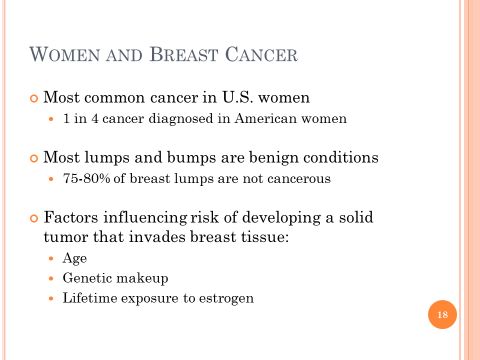
Excluding cancers of the skin, breast cancer is the most common cancer among women, accounting for slightly more than 1 in every 4 cancers diagnosed in American women. After lung cancer, breast cancer is the second leading cause of death in women. The incidence of breast cancer has increased over the past decade, but breast cancer deaths have declined. This is probably because of earlier cancer detection, improved treatment, and decreased use of menopausal hormone therapy in older women. It's important to recognize that most breast lumps-75-80%-are not cancerous. Many disappear on their own. Of lumps that are surgically removed for diagnostic purposes, 80% prove to be benign. Assessing the risk of getting breast cancer is a complex, imprecise, and evolving science. However, there are three known factors that overwhelmingly influence a woman's risk of developing a solid tumor that invades her breast tissue: age, genetic makeup, and lifetime exposure to estrogen. Simply being a woman who is aging increases the risk of developing breast cancer, with the majority of cases occurring in women aged 60 and older.
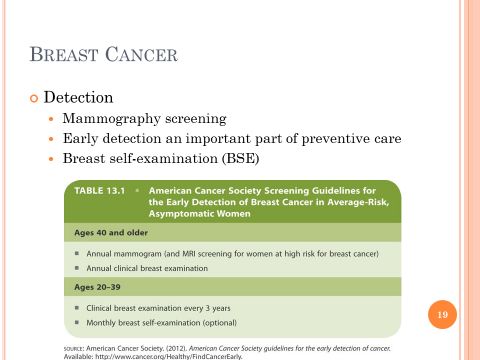
The American Cancer Society provides guidelines for early detection of breast cancer. The screening recommendations present guidelines for average-risk, asymptomatic women aged 40 or older and 20-39 years of age . Women at increased risk should talk with their doctors about the benefits and limitations of starting mammography screening earlier, having additional tests, such as MRI, or having more frequent exams. Mammography is the use of X-rays to detect breast tumors before they can be seen or felt. Early detection is an important part of preventive care. The earlier breast cancer is found, the better the chances that treatment will be effective and the breast can be saved. The goal is to discover cancer prior to symptoms appearing. Because a large majority of tumors are detected by women themselves, a heightened awareness of her normal breast composition can help a woman to notice changes and, when necessary, seek early medical attention. Breast self-examination (BSE) is an option for women in their 20s and 30s. Research has shown that BSE plays a slight role in discovering breast cancer compared with finding a breast lump by chance or just being aware of what is normal for each woman. Women who have breast implants can also do BSE. These women should have their surgeon help them identify the edges of the implant so that they can know what they are feeling. Image: McGraw Hill
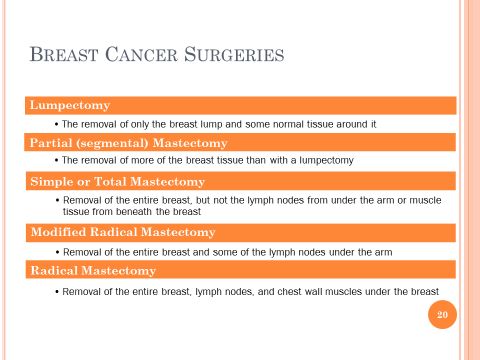
Most women with breast cancer undergo some type of surgery to remove the primary tumor. Common breast cancer surgeries described by the American Cancer Society include the following: A lumpectomy is a procedure that involves the removal of only the breast lump and some normal tissue around it. A partial mastectomy is the surgery that involves the removal of more of the breast tissue than with the lumpectomy. A simple or total mastectomy is an operation that involves the removal of the entire breast but not the lymph nodes from under the arm or muscle tissue from behind the breast. A modified radical mastectomy is the surgery that involves the removal of the entire breast and some of the lymph nodes under the arm. This is the most common breast cancer surgery. A radical mastectomy is the operation that involves the removal of the entire breast, lymph nodes, and chest wall muscles under the breast. Because the modified radical mastectomy has proven to be just as effective, with less disfigurement and fewer side effects, radical mastectomy is rarely done now. Surgery may also be combined with other treatment such as chemotherapy, hormone therapy, or radiation therapy.
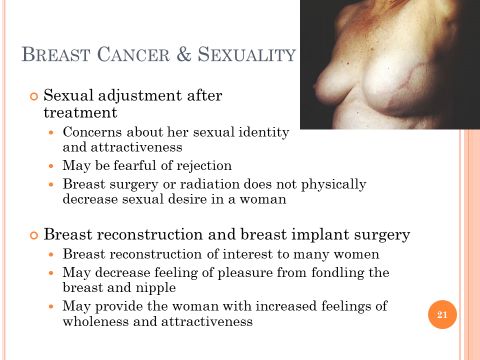
Sexuality is one aspect of life that may be profoundly altered by cancer. A woman with breast cancer often has worrisome concerns about her sexual identity and attractiveness. Psychologically, the loss of a breast may symbolize her loss of sexuality. She might feel scarred or fearful of rejection. Besides affecting her body image, some breast cancer treatments can change a woman's hormone levels and may affect sexual interest and response. However, breast surgery or radiation do not physically decrease sexual desire in women, nor does it decrease her ability to have sexual intercourse and orgasm. Because breast cancer is sometimes treated by surgical removal of the breast, the subject of breast reconstruction is one of paramount interest to many women. Deciding about breast reconstruction involves many issues, and a woman should become fully informed about the procedure. For example, the feeling of pleasure from fondling the breast and nipple is typically decreased, but the reconstruction may provide the woman with an increased feeling of wholeness and attractiveness. A woman should be realistic about what to expect from reconstruction. Image: McGraw Hill
Outside of breast cancer, there is also cervical cancer, which can affect the sexual health of women. Cervical dysplasia, a condition of the cervical epithelium—although it's not cancer, it is considered a precancerous condition. Almost all cases of cervical dysplasia or cervical cancer are caused by the human papillomavirus, or HPV, a common virus that is spread through sexual contact. However, the risk of cancer is lower for mild dysplasia. Early diagnosis and prompt treatment cures nearly all cases of cervical dysplasia. The more advanced and dangerous malignancy is invasive cancer of the cervix, also called cervical cancer. The most important risk factor for cervical cancer is infection by the sexually transmitted human papillomavirus (HPV), although most women with HPV do not get cervical cancer as the infection usually goes away without any treatment. When detected and treated in its earliest stages, the disease is both prevented from spreading to other organs and cured. Unusual discharge, bleeding, spotting, or pain or bleeding during sex may be signs of cervical cancer. The most reliable means of early detection of cervical cancer is the Pap test or the Pap smear. The Pap test is usually done during a pelvic exam and takes about one minute. Cell samples and mucus are lightly scraped from the cervix and examined under a microscope. If anything unusual is found, the physician will do further tests. Women should have a Pap test annually unless their physician recommends otherwise. Depending on the extent and severity of the dysplasia and whether it has progressed to cancer, other treatment options range from electrocauterization, to laser surgery, radiotherapy, or a hysterectomy.
Ovarian cancer is cancer of the ovaries. Ovarian cancer is hard to diagnose because there are no symptoms in the early stages; it is not usually detectable by a Pap test or biopsy. Treatment involves surgical removal of the tumor and the ovary, often followed by radiation or chemotherapy. If ovarian cancer is found early, the chances of survival are much greater. More than 95% of cancers of the uterus involve the endometrium, the lining of the uterus. Certain women appear more at risk for developing endometrial cancer than others, including those who are American and who have had exposure to high-energy radiation. Obesity, treatment with tamoxifen, infertility, diabetes, menstruation before the age of 12, and menopause after the age of 52 are risk factors for endometrial cancer. Treatments include the surgical removal of the uterus, which is known as a hysterectomy. Vaginal cancer is rare, accounting for only about 2-3% of the cancers of the female reproductive system, although some cancers start in other organs (such as the uterus or bladder) and then spread to the vagina. Symptoms include abnormal vaginal bleeding, vaginal discharge, a mass that can be felt, and pain during intercourse. Treatment options, based on the type of cancer and stage of the disease when diagnosed, include surgery, radiation, and chemotherapy in combination with radiation for advanced disease.
Generally, men are less likely than women to get regular checkups and to seek help at the onset of symptoms. This tendency can have unfortunate consequences where reproductive cancers are concerned, because early detection can often mean the difference between life and death. Men should pay attention to what goes on in their genital and urinary organs. Generally, men are less likely than women to get regular checkups and to seek help at the onset of symptoms. This tendency can have unfortunate consequences where reproductive cancers are concerned because early detection can often mean the difference between life and death. Men should pay attention to what goes on in their genital and urinary organs. Men also face cancer issues which affect their sexual health. Prostate cancer is the most common form among American men and the second cause of death. Its risk factors include aging, family history, being African American, having a high-fat diet, and obesity. It is detected using the digital rectal exam and the prostate-specific antigen test. Treatment includes surgery, hormone therapy, radiation therapy, and chemotherapy, or just watchful waiting. Prostate cancer develops slowly over many years, and most cases are not life-threatening. For an older man or one in poor health, prostate cancer may never become a major problem because it often grows so slowly. If the cancer has not spread beyond the prostate gland, all or part of the gland is removed by surgery. Radical surgery has a high cure rate, but it often results in incontinence and erectile difficulties. An alternative to removal of the prostate is "watchful waiting," in which men do not have any treatment, such as surgery or radiation therapy, immediately after the cancer diagnosis but are closely followed by their physicians to see if the tumor begins to grow and advance. Because prostate cancer often spreads slowly, some men may never need treatment.
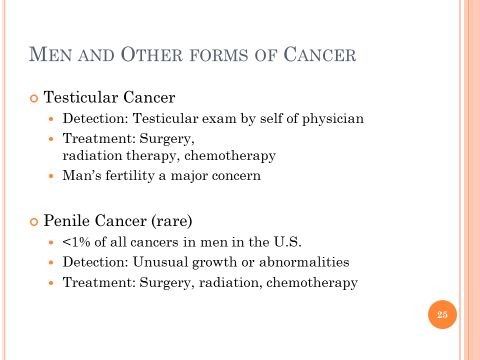
Most cases of testicular cancer can be found at an early stage. The first sign of testicular cancer is usually a painless lump or slight enlargement and a change in the consistency of the testicle. Some types of testicular cancers have no symptoms until the advanced stage. Because of the lack of symptoms and pain in the early stage, men often do not go to a doctor for several months after discovering a slightly enlarged testicle.
The examination of a man's testicles is a valuable part of a general physical examination for testicular cancer detection by a physician. The Testicular Self-Exam (TSE) is a self-exam that men can use to detect lumps and changes in the testicles on his own. Testicular cancer is a highly treatable form of cancer. The three main methods of treatment are surgery, radiation therapy, and chemotherapy. Although the cure rate for all types of testicular cancer is very high the man's fertility is often a major concern.
Cancer of the penis affects only 1 out of every 100,000 men and accounts for less than 1% of cancers in men in the United States. Many cases of penile cancer can be detected early on. Men should be alert to any unusual growths on or other abnormalities of the penis. If such changes occur, men should promptly consult a physician. Treatment options include surgery, radiation, and chemotherapy. Most early-stage penile cancers can be completely cured by fairly minor surgery: with little or no damage to the penis.
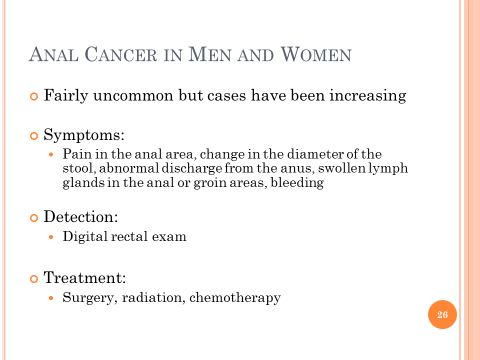
Anal cancer is fairly uncommon, although the number of cases has been increasing for many years. Increasing rates of anal cancer may be due to the more prevalent practice of anal intercourse and to the high prevalence of HPV infection. Pain in the anal area, change in the diameter of the stool, abnormal discharge from the anus, and swollen lymph glands in the anal or groin areas are the major symptoms of anal cancer. Bleeding occurs in more than half of the cases of anal cancer and is usually the first sign of the disease. The digital rectal examination for prostate cancer will find some cases of rectal cancer. Like many other cancers, surgery, radiation therapy, and chemotherapy are the major treatments for anal cancer.
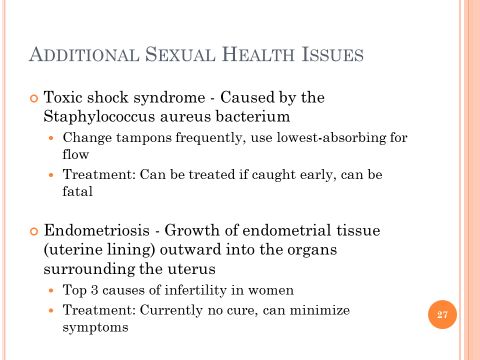
Two disorders of the female reproductive system are toxic shock syndrome and endometriosis. Toxic shock syndrome is caused by superabsorbent tampons or other devices that block the vagina or cervix during menstruation, which lead to an overgrowth of Staphylococcus aureus bacterium. It is recommended that all women who use tampons reduce the already low risk by carefully following the directions for insertion, choosing the lowest-absorbing one for their flow, changing the tampon more frequently, and using tampons less regularly. Toxic shock syndrome can be treated if detected early but if not, it can be fatal. Endometriosis is one of the most common gynecological diseases. It involves the growth of endometrial tissue outward into the organs surrounding the uterus. Symptoms of endometriosis include intense pelvic pain, very painful cramps or periods, heavy periods, intestinal pain, pain during or after sex, and infertility. There is currently no cure for endometriosis, but there are ways to minimize the symptoms caused by the condition, and endometriosis-related fertility can be treated successfully using hormones and therapy.
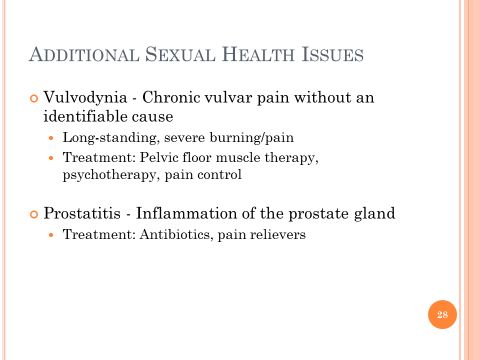
There are also two conditions associated with sexual health issues. One condition is vulvodynia. This is defined as chronic vulvar pain without an identifiable cause. Though often misdiagnosed, the pain that women who suffer from vulvodynia is often long-lasting, involves severe burning, and may interfere with their ability to maintain an active sex life. At this time, there is no cure for vulvodynia. Treatments that can partially or totally alleviate symptoms are available, including pelvic floor muscle therapy, psychotherapy, and pain control, but no single treatment works all the time or is best for every woman. Many of men's sexual health problems are related to sexually transmitted infections. One condition affecting men that is not sexually transmitted is prostatitis, the inflammation of the prostate gland. Symptoms of prostatitis include frequent and urgent need to urinate and pain or burning when urinating, often accompanied by pelvic, groin, and low back pain. Digital rectal exam and urine and semen tests are used to diagnose prostatitis. Antibiotics and pain relievers are the main treatment for prostatitis; acute prostatitis may require a short hospital stay.
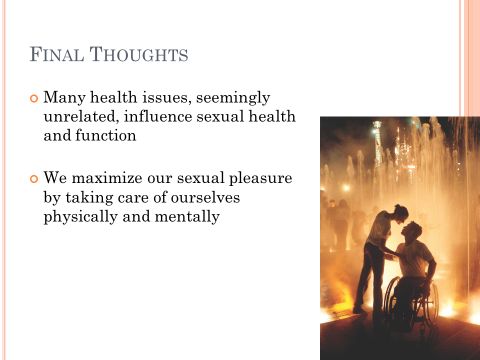
Many health issues, seemingly unrelated, influence sexual health and function. I encourage you to learn more about your own body. Read about health issues that apply or may apply to you and the people close to you, as well as maximize your sexual pleasure by taking care of yourself physically and mentally.
Image: McGraw Hill