Table of Contents
- The Sexual Body in Health and Illness Chapter 13
- The Sexual Body in Health and Illness
- Living in Our Bodies: The Quest for Physical Perfection
- Living in Our Bodies: The Quest for Physical Perfection
- Eating Disorders
- Eating Disorders
- Eating Disorders
- Anabolic Steroids: A Dangerous Means to an End
- Alcohol, Drugs, and Sexuality
- Alcohol and Sexuality
- Drugs and Sexuality
- Most Commonly Cited Drugs Used by a Sample of 18-39 Year-Olds Who Reported Ever Using a Drug to Improve Sexual Functioning
- Sexuality and Disability - Changing Expectations
- Sexuality and Disability - Physical Limitations
- Sexuality and Disability - Physical Limitations
- The Sexual Rights of People With Disabilities
- Sexuality and Cancer
- Women and Breast Cancer
- Breast Cancer
- Breast Cancer Surgeries
- Breast Cancer & Sexuality
- Cervical Dysplasia And Cervical Cancer
- Women and Other forms of Cancer
- Prostate Cancer
- Men and Other forms of Cancer
- Anal Cancer in Men and Women
- Additional Sexual Health Issues
- Additional Sexual Health Issues
- Final Thoughts
Text and Images from Slide
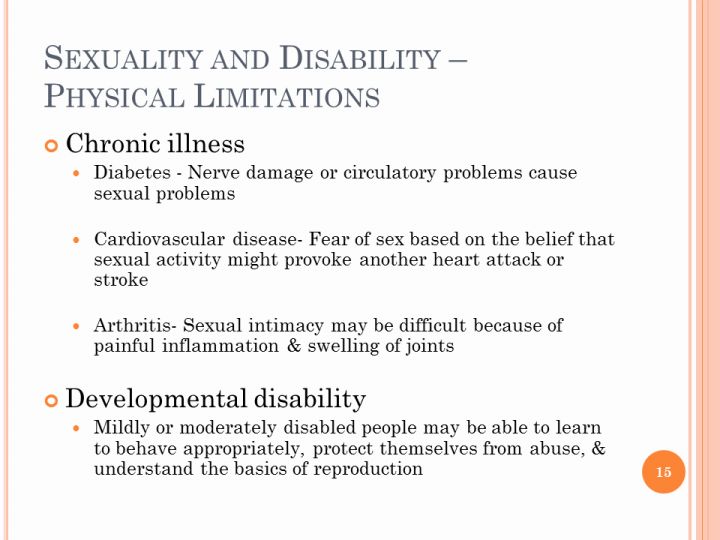
Sexuality and Disability - <br />Physical Limitations
- Chronic illness
- Diabetes - Nerve damage or circulatory problems cause sexual problems<br />
- Cardiovascular disease- Fear of sex based on the belief that sexual activity might provoke another heart attack or stroke<br />
- Arthritis- Sexual intimacy may be difficult because of painful inflammation & swelling of joints
- Developmental disability
- Mildly or moderately disabled people may be able to learn to behave appropriately, protect themselves from abuse, & understand the basics of reproduction
15