Lecture Notes
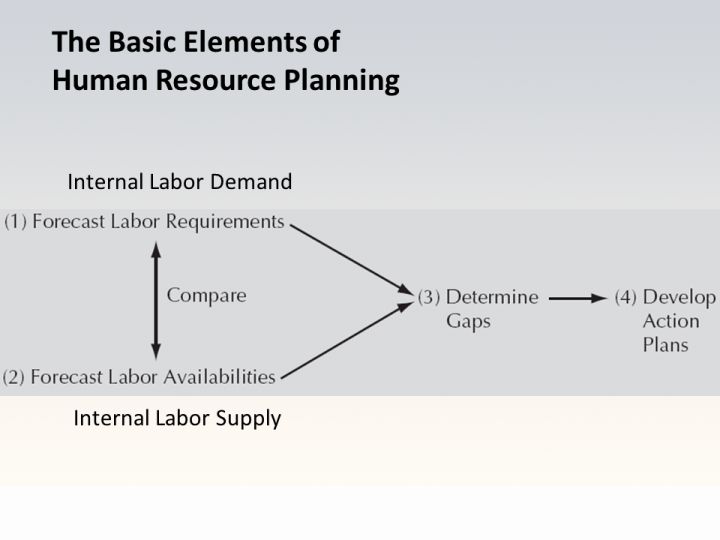
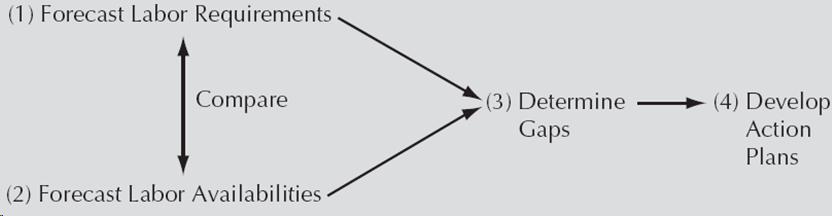
So as we get into a human resource planning specifically we kind of talked about some of the influences, we still think about labor supply and demand at least at the national level but out once we kind of dive in here, what's going on with HR planning and this gets back to the definition I covered at the start of the lecture, is we're going to look internal labor demand compared to internal labor supply. And so that's looking at the forecast, so future labor requirements and comparing it to forecasted future labor availabilities. We'll then say, do gaps exist and how large are they? Do they represent a surplus ar a shortage? And then depending on the gaps we can develop action plans. Try to close these gaps. I would like to note as well this point, a term in the text that we will be using FTE's. FTE's stand for full time equivalents so we use this often when we're getting into the quantitative head count of employees. And what this is getting at is you know we might have part time and full time employees and we want a common metric to talk about them together so how do we do that, well say we have a 40-hour work week and that's considered full time then our time employees will simply be multiplied by the percentage of time that they work. So if they work half time, they work 20 hours then we would just multiply them by 0.5 right, that's 50% of the full time employee. So we use the resulting numbers to set out how many employees do we actually need hired, both accounting for full time and part time employees together.